
The Safety Benefits of Epoxy Flooring
As an epoxy flooring company serving Southeastern Alberta, safety isn’t just a checkbox for us—it’s the foundation of every residential, commercial, and industrial installation.
It’s no secret that epoxy is famous for its “wow factor.” That sleek, mirror-like shine can make a gritty garage or a sprawling showroom look like a million bucks instantly. But if you look beneath that high-end aesthetic, you’ll discover that epoxy is actually a hard-working safety feature masquerading as a design choice.
Whether it’s a high-traffic warehouse or a busy family kitchen, here is how epoxy floors keep people upright and out of harm’s way.
Residential Safety: The Home Advantage
Your home is your sanctuary, but areas like garages, basements, and laundry rooms are notorious for slips and falls.
- Fire Retardancy: Most high-quality epoxy coatings are naturally fire-resistant. In a garage where flammable liquids are often stored, this provides an extra layer of protection for the rest of the house.
- Dust Suppression: Bare concrete “chalks” over time, releasing fine silica dust into the air that can aggravate allergies or asthma. Epoxy seals the concrete completely, keeping the air quality in your home much cleaner.
- Easy Cleanup: Spills—from motor oil to grape juice—sit on top of the surface rather than soaking in. This allows for immediate cleanup, preventing the sticky or slippery residue that leads to accidents later.
Commercial Spaces: Managing Liability
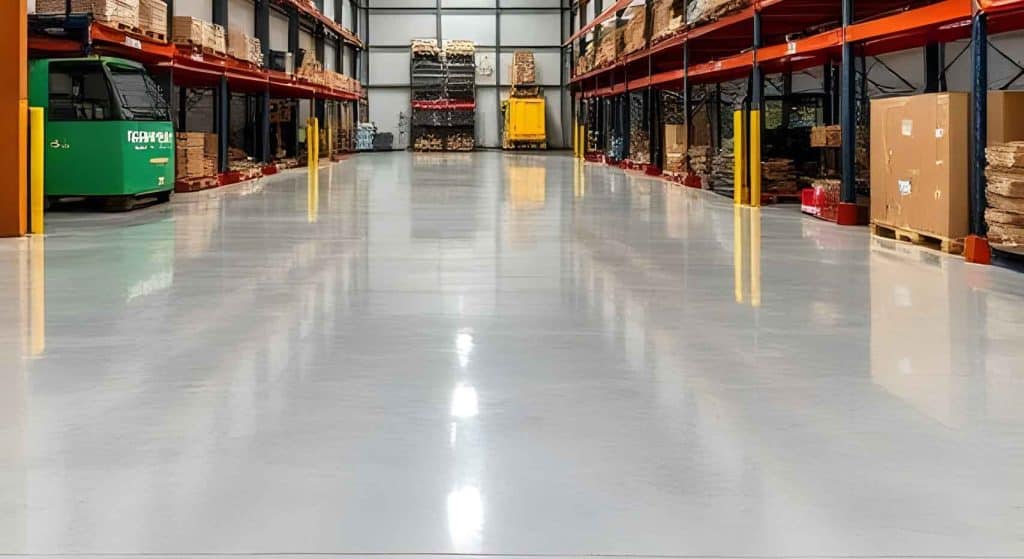
For retail stores, hospitals, and restaurants, safety is often synonymous with liability management. * Reflective Lighting: The high-gloss finish of epoxy isn’t just for show; it reflects light back up. This increases overall brightness by up to 200%, significantly reducing accidents in dimly lit areas like storage rooms or parking garages.
- Sanitation & Hygiene: Because epoxy is seamless, there are no grout lines or cracks where bacteria, mold, or pathogens can hide. This makes it a gold standard for healthcare environments and commercial kitchens.
- Slip Resistance: While it looks “slick,” professionals can add anti-slip aggregates (like quartz or aluminum oxide) to the topcoat. This provides a “sandpaper” grip that stays effective even when wet.
Industrial Environments: Built for the Extremes
In a factory or warehouse, the floor isn’t just a surface; it’s a critical piece of equipment. Epoxy provides a level of protection that raw concrete simply can’t match.
- Zone Marking & Visibility: Epoxy allows for permanent, high-contrast safety markings. You can embed “Walk” lanes, forklift paths, and “Keep Clear” zones directly into the floor.
- Impact Resistance: Dropping a heavy tool on bare concrete can cause chipping and “spalling,” creating trip hazards. Epoxy acts as a shock absorber, maintaining a level surface.
- Chemical Shielding: Industrial epoxy is formulated to resist corrosive chemicals. This prevents hazardous liquids from seeping into the substrate and causing structural damage or releasing toxic fumes.
| Feature | Safety Benefit | Best Environment |
| High Reflectivity | Improves visibility in low-light areas | Parking Garages, Warehouses |
| Seamless Surface | Prevents bacterial growth and mold | Hospitals, Kitchens |
| Anti-Slip Additives | Increases traction even when wet | Entrances, Ramps, Pool Decks |
| Chemical Resistance | Prevents floor degradation and leaks | Labs, Manufacturing Plants |
The Bottom Line: While the aesthetic appeal of epoxy is undeniable, its true value lies in its ability to prevent accidents before they happen. It transforms a passive surface into an active safety tool.
For information on epoxy flooring solutions that protect your people and property visit Armoursheild Epoxy Flooring.